Thinning hair can affect your confidence, especially when expensive shampoos, hair oils, and salon treatments promise fuller-looking hair. The good news is that you do not need to spend hundreds of dollars to take better care of your hair.
A simple hair care routine for thinning hair can start with a suitable shampoo, conditioner, gentle styling habits, and a few carefully chosen products. The goal is to keep your scalp clean, improve hair manageability, and reduce avoidable breakage without wasting money on products you do not need.
Whether you are looking for an affordable hair care routine in Chicago or anywhere else in the USA, choosing products for your specific hair needs is more useful than following every new hair care trend.
In this guide, you will learn how to create a hair care routine on a budget, choose suitable products, protect fragile strands, and understand when thinning hair needs professional attention.
What Is the Best Hair Care Routine for Thinning Hair?
The best routine for thinning hair focuses on scalp cleanliness, conditioning, gentle detangling, and protecting your hair from damage. You can begin with a few essentials instead of purchasing an entire shelf of products.
- Shampoo: Clean your scalp with a formula suited to your scalp type.
- Conditioner: Improve softness and make your hair easier to detangle.
- Hair growth oil: Consider an appropriate oil if your hair needs additional conditioning.
- Leave-in conditioner: Use one if your hair tangles easily or needs extra manageability.
- Heat protectant: Protect your hair when using heated styling tools.
You do not need every product every day. Start with the essentials and add products only when they address a specific concern.
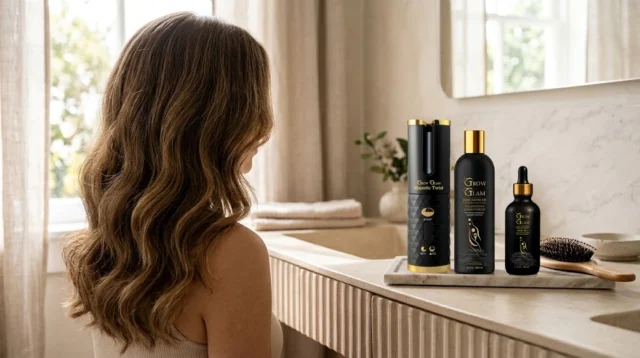
If you are looking for a simple starting point, explore the Grow Glam hair care collection to review the products available for your routine.
Step 1: Understand the Difference Between Thinning Hair and Hair Breakage
Before buying products for thinning hair, identify what you are noticing. Hair breakage and hair loss can look similar, but they have different causes.
Hair Breakage
Hair breakage happens when strands snap along their length. You may notice shorter pieces, split ends, rough texture, and difficulty growing your hair longer.
Common contributors include excessive heat styling, rough brushing, chemical treatments, and friction. A suitable conditioner and gentle styling routine may help reduce avoidable breakage.
Hair Shedding and Hair Loss
Hair shedding occurs when hair falls out from the scalp. Persistent shedding or visible thinning can be associated with genetics, hormonal changes, illness, stress, nutritional deficiencies, or scalp conditions.
Cosmetic hair growth products may help improve the appearance and condition of existing strands, but they cannot treat every cause of hair loss. If you notice sudden shedding, bald patches, or a widening part, consult a dermatologist or healthcare professional.
Step 2: Choose an Affordable Shampoo for Thinning Hair
You do not need an expensive shampoo to maintain a clean and comfortable scalp. The right shampoo for thinning hair should suit your scalp and leave your hair feeling manageable without excessive dryness or irritation.
If your scalp becomes oily quickly, a suitable cleansing shampoo may help remove excess oil and product residue. If your hair is dry, consider a formula that cleans gently without making the lengths feel rough.
How to Save Money on Shampoo
- Choose shampoo according to your scalp type instead of advertising claims.
- Compare the price per ounce before purchasing.
- Use the amount recommended on the label.
- Avoid buying multiple products that perform the same job.
- Do not expect ordinary shampoo to cure genetic or medical hair loss.
Remember that a good shampoo cleans your scalp. It does not need to promise dramatic regrowth to be a useful part of your daily hair care routine.
Step 3: Use Conditioner to Reduce Tangling and Breakage
Conditioner is an important part of a hair care routine for fine or thinning hair, especially when your strands tangle easily or feel dry after washing.
A suitable conditioner for thin hair can improve softness, reduce friction, and make combing easier. Choose a lightweight formula if heavier products make your roots look flat.
How to Apply Conditioner Correctly
- Wash your hair with a suitable shampoo.
- Gently squeeze excess water from your hair.
- Apply conditioner mainly to the lengths and ends.
- Leave it on for the time stated on the product label.
- Rinse thoroughly and detangle gently.
Skipping conditioner to save money may not be helpful if it leaves your hair difficult to manage. One suitable conditioner can be a more practical investment than several unnecessary styling products.
Step 4: Add Hair Growth Oil Only When You Need It
Hair growth oil can be an optional addition to your routine if your hair feels dry, looks frizzy, or needs extra conditioning. However, applying more oil does not automatically make hair grow faster.
Depending on the formula, oils such as jojoba, coconut, almond, and olive oil can help condition hair and improve its feel. Some oils may also reduce friction between strands. Results depend on the ingredients, formulation, and your hair type.
If you want to try a hair oil, begin with a small amount and monitor how your hair responds. Applying too much can make fine hair look greasy or weigh it down.
Is Grow Glam Hair Growth Oil Worth Considering?
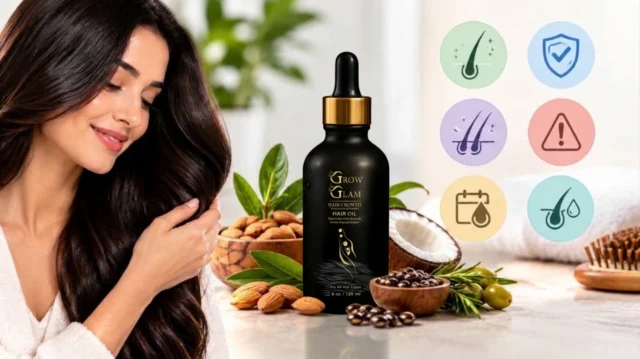
If you want to include oil in your hair care routine for thinning hair, you can review Grow Glam Hair Growth Oil and check its ingredients and application instructions.
The formula includes ingredients such as sweet almond oil, jojoba oil, soybean oil, olive oil, castor oil, coconut oil, fenugreek, rosemary, vitamin E, aloe, amla, hibiscus, and black seed.
Different ingredients have different cosmetic properties, and the results depend on the finished formula. Hair oil may help condition strands, but it should not be treated as a guaranteed treatment for hair loss or new hair growth.
For additional guidance, read our article on why hair may not grow as expected after using hair oil.
Step 5: Use Leave-In Conditioner for Easier Styling
If your hair gets tangled after washing or becomes frizzy throughout the day, a leave-in conditioner for thin hair may be helpful.
Leave-in conditioners can improve slip and manageability, making it easier to comb and style your hair without excessive pulling. Fine hair usually benefits from a lightweight formula applied sparingly.
Apply the product according to its directions, focusing on the lengths and ends rather than coating the roots with too much product.
You do not need several leave-in creams, serums, and oils at the same time. Start with one product that solves your main problem and see how your hair responds.
Step 6: Protect Your Hair From Heat and Tight Hairstyles
Even the best hair care products cannot fully prevent damage if your daily styling habits repeatedly stress your hair. Simple changes can help you protect your existing strands without spending extra money.
Reduce Heat Damage
Frequent high-heat styling can damage the hair shaft and contribute to breakage. Use lower heat settings when possible, avoid repeated passes over the same section, and allow your hair to air-dry when practical.
Before using a curling iron, flat iron, or blow dryer, apply a product specifically designed for heat protection. Regular hair oil is not automatically a substitute for a heat protectant.
Avoid Tight Hairstyles
Tight ponytails, buns, and braids can place repeated tension on the roots. Over time, this may contribute to traction alopecia.
Choose looser hairstyles and avoid styles that cause discomfort or pull strongly at your hairline.
Brush Gently
Aggressive brushing can increase breakage, especially when hair is tangled or fragile. Use a suitable brush or wide-tooth comb and work through knots carefully, starting near the ends.
For more practical advice, check out our guide to common hair care mistakes women make every week.
Step 7: Follow a Simple Weekly Hair Care Routine
A useful weekly hair care routine for thinning hair does not have to be complicated. Adjust the schedule to your scalp, lifestyle, and hair texture.
| Product or Habit | How to Use It | Budget-Friendly Tip |
|---|---|---|
| Shampoo | Wash as often as your scalp needs. | Choose one suitable formula. |
| Conditioner | Use after shampooing. | Focus on the lengths and ends. |
| Hair oil | Use only when needed and as directed. | Start with a small amount. |
| Leave-in conditioner | Apply when extra detangling is needed. | Choose a lightweight formula. |
| Heat protectant | Use before heated styling. | Use it when heat styling rather than buying unnecessary extras. |
| Gentle styling | Avoid excessive pulling and heat. | Make these free habits part of your routine. |
People with oily scalps may need to wash more frequently, while dry or textured hair may need a different schedule. Choose a routine that keeps your scalp comfortable and your hair manageable.
How to Build a Hair Care Routine on a Budget
Creating an affordable hair care routine is about spending wisely, not buying the cheapest product available or collecting every trending item.
1. Buy the Essentials First
Start with shampoo and conditioner. Add a leave-in conditioner if your hair needs extra detangling, and a heat protectant if you use heated tools. Hair oil is optional.
2. Compare the Cost Per Use
Compare bottle sizes and prices before buying. A product that costs slightly more may last longer, but only if it suits your hair and you use it regularly.
3. Avoid Miracle Hair Growth Claims
Be cautious of products promising instant results or guaranteed regrowth. Hair growth is gradual, and persistent thinning may require a medical assessment rather than another cosmetic product.
4. Introduce Products One at a Time
Using several new products at once makes it difficult to identify which one helps or causes irritation. Add one product at a time and monitor the results.
5. Follow a Consistent Routine
Constantly changing products can waste money and make it difficult to understand what works. Choose suitable essentials and give yourself time to evaluate their effects on softness, manageability, and breakage.
You can also explore our guide to a weekly hair care routine for healthier-looking hair for additional ideas.
Common Mistakes to Avoid When Caring for Thinning Hair
- Using too much hair oil: Excess oil can make hair greasy and create product buildup.
- Skipping conditioner: Tangled hair may be harder to comb without breakage.
- Buying too many products: More products do not automatically produce better results.
- Using excessive heat: Frequent high heat can damage strands and increase breakage.
- Expecting shampoo to stop all hair loss: Cosmetic products cannot address every cause of thinning.
- Ignoring persistent shedding: Professional assessment can help identify the underlying cause.
When Should You Seek Professional Help for Thinning Hair?
A gentle routine can help you care for your hair, but it cannot replace professional treatment when hair loss has an underlying cause.
Speak with a dermatologist if you notice sudden shedding, bald patches, a widening part, persistent thinning, scalp pain, or ongoing inflammation. Depending on the cause, a healthcare professional may recommend further assessment or an evidence-based treatment.
Avoid taking hair growth supplements without a clear reason or appropriate guidance. Excessive amounts of certain nutrients can be harmful, and supplements do not reliably solve hair loss when a deficiency is absent.
Build Your Hair Care Routine With Grow Glam
You do not need an expensive collection of products to start caring for thinning hair. Focus on the basics: a suitable shampoo, conditioner, gentle styling habits, and optional products that address your specific needs.
Grow Glam offers hair care options, including Grow Glam Hair Growth Oil. Review the available products, check their ingredients, and follow the instructions to decide what fits your routine.
Visit the Grow Glam hair care collection to explore available options and build a routine that suits your hair type and budget.
Remember, healthy hair care is about consistency, gentle handling, and choosing products for the right reasons. If your hair continues to thin, seek professional advice instead of relying only on cosmetic products.
Frequently Asked Questions
1. What is the best hair care routine for thinning hair?
Start with a shampoo suited to your scalp and a conditioner that improves manageability. Add a lightweight leave-in conditioner if needed, limit heat styling, and avoid tight hairstyles. Hair oil is optional and does not guarantee hair regrowth.
2. How can I care for thinning hair on a budget?
Buy only the essentials, compare product prices per ounce, avoid duplicate products, and use gentle styling habits. A suitable shampoo and conditioner are a practical starting point.
3. Does hair growth oil make thin hair thicker?
Hair oil may improve softness and help reduce some forms of breakage, making hair look healthier. However, it does not guarantee increased hair density or treat every cause of hair loss.
4. Is conditioner good for thin hair?
Yes, a suitable lightweight conditioner can improve softness and reduce tangling. Apply it mainly to the lengths and ends if heavier products make your roots look flat.
5. How often should I wash thinning hair?
Wash according to your scalp’s needs, hair texture, and activity level. Oily scalps may need more frequent washing, while dry hair may need a different schedule.
6. When should I see a dermatologist for thinning hair?
Seek professional advice if you experience sudden shedding, bald patches, a widening part, persistent thinning, or scalp irritation. A dermatologist can help identify possible causes and appropriate treatment options.